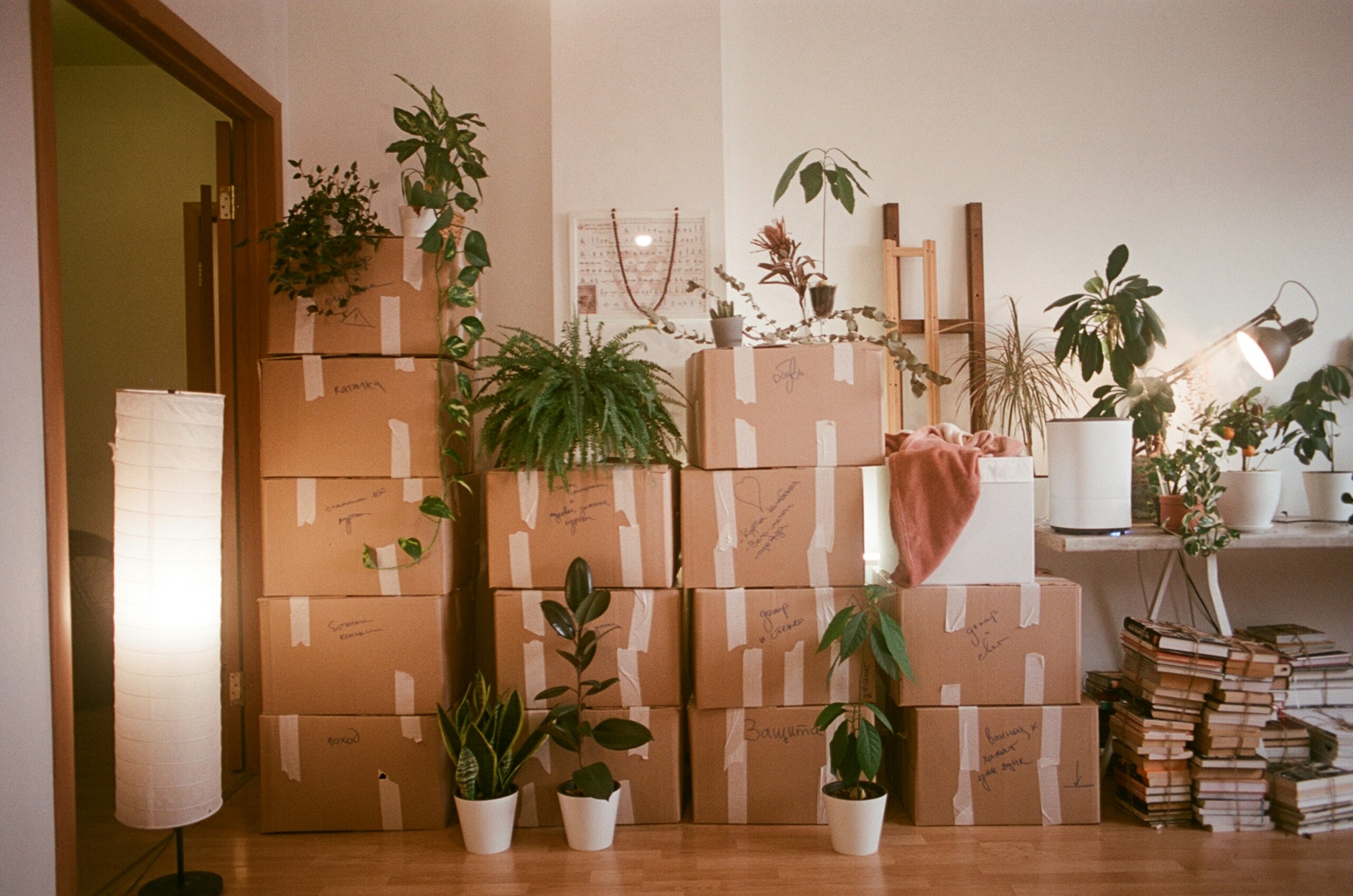

You’ve just finished unpacking all the boxes in your first apartment. Your furniture is where you want it and you’ve made a few trips to HomeGoods for rugs, lamps, and accessories. But your walls are still bare. Photo collages of you and your besties don’t say “hey I’m an adult now” like you really want your new home to do.
Don’t worry. Here’s how you can decorate your first apartment with art that tells the story you want it to—and that you love to look at!
First up, let’s talk about the art you have. Your instincts were right about the photo collages. It’s not that there’s no place for them now, but those places might be the more private areas of the apartment, like your bedroom. Throw those photos in some collage frames in your bedroom so you don’t have to hide them away, but give the art in the living room, kitchen, or hallway a chance to wow you and your visitors.
Tip: The same goes for posters. They look right in a dorm room or your room at your parents’ house, but in most cases, it’s best to shelve these going forward. If there’s a particular concert poster that’s really meaningful to you, try framing it with a mat. That can help it look more like the art you feel it is. (This is something I did in my own home! I’m looking at the poster in my living room right now, and until you get close enough to see the band’s autographs, it looks like a digital art piece.)
If you’ve collected some college or hometown-related art already, that’s a great place to build on thematically in your home. You can get city map outlines for nearly anywhere these days, and the architecture on college campuses is often breathtaking and is often captured by local photographers and artists. Sketches of a church or historic theater in town can lend a little bit of heft to your space. You don’t want it to feel like you never moved away, but displaying a piece or two from your current collection is a great way to start decorating.
Next, let’s talk about building the new collection. While there’s definitely an allure to getting an original oil painting to hang in your entry, when you’re trying to start your art collection and you have a lot of empty walls to fill, it’s best to start with prints rather than originals.
That doesn’t mean you’re compromising! It means you’re optimizing your selections to get as much of the art that you love as you can afford. Prints also come in museum-quality materials and aren’t necessarily a step down in quality, they’re just not the original piece of art. Fine art canvases are beautiful to look at, and fine art paper used for photography prints is heavy, textured, and brings out the details in a print.
Remember, this is about getting your new space looking complete and telling the story about who you are and who you want to be right now. There’s plenty of time in the future to level up your collection!
Now that you’ve addressed your budget, you have to look at the space you need to fill. Not every inch of wall needs to be covered. Giving special pieces space to breathe is important, and while there’s certainly a vintage aesthetic to having art plastered on a wall all the way to the ceiling, that’s not usually what people are going for in a first apartment.
Take an inventory of your available wall space, and start trying out different sizes of art in the space by using painter’s tape to mock up how the art would cover the wall. Try out different sizes and quantities of pieces in a space to determine what you like. One big piece may look better to your eye than a small gallery of three pieces, but trying those out without having to buy pieces or put holes in the wall is invaluable.
Now that you know your space, here’s what to actually look for when choosing pieces. When you’re looking for new pieces, consider a few things about the rooms you’re trying to decorate.
The size of the room helps determine the size of the print you put in it. If you have a cozy bedroom, a huge print might overwhelm the space, but a few smaller pieces of wall art could be just the accent that brings the room together. A big room is going to swallow a small piece and really needs a larger print.
The function of the room is also going to help determine what kind of print you’re going to want to look for. Busy, bright pieces might not belong in a bedroom where you’re looking for calm and tranquility. Think about the center of your new apartment. Where do you spend the most time or energy? You may consider putting your bolder pieces in there so that the energy you get from your surroundings matches what you put into them.
As a renter, painting the walls may not be an option, so art becomes one of your best tools to bring color into a room. Consider the existing colors in the room—do you have accent pillows, rugs or throw blankets that are already in the room? If so, you want to try and look for art with those colors or complementary colors in it.
The most important quality of a piece of art you choose is that you love it. It should fascinate or delight you. It should make you happy to look at, no matter why. It could be because it’s art about a place you traveled to and loved or a place you’ve never been but can’t wait to go. Trust your heart when it comes to your taste.
Finally, make sure you’re budgeting for framing, both in cost and in space.
It’s very frustrating to get all your art in and then realize you’re going to have to wait a month or two to hang it all up because you forgot to budget for the cost of frames.
You’ve probably heard of places like Framebridge, which is a custom framing service that advertises a lot on podcasts and YouTube. If you have the money for that service, that’s great! But I remember trying to furnish my first apartment and when I went to their website to get a ballpark on how much it’d cost to send my pieces to them…well, it was eye-opening. Custom framing is custom, and the costs are commensurate with the amount of work involved.
However, that is not your only option! I’ve found that Michael’s and Target both have nice-looking frames for a fraction of the price of going custom. Now, they usually come only in more standard sizes, so if you’re working with nonstandard sized pieces, you might have to do a little work after the fact to get them to fit.
If you’re looking for a super low-cost solution, IKEA also sells frames that use plexiglass instead of real glass. The optical quality isn’t as good, but the price is much lower and you can always upgrade later on.
After you’ve set aside money for frames, go back to your painter’s tape layouts and make sure you adjust the layout for the size of the frame as well. You don’t want to have your heart set on a certain piece in a space and then realize that when you hang it up framed, it looks cramped in that space.
Ready to decorate?
Now that you understand how to incorporate new pieces into your existing collection, the value of prints, and how to frame them affordably, you’re ready to start building your collection.
If you’re looking for fine art photography prints that work beautifully in apartments—whether you need a statement piece for that blank living room wall or smaller prints for a gallery arrangement—browse my collection at alexandrasizemore.com. I work across different sizes and materials so you can find exactly what fits your space and your budget.
And if you want help thinking through what art belongs in your home, I’ve got a free guide on choosing prints that you can grab by signing up for my email list.
Navigate the process for choosing art for your space
Download our guide to help you navigate the process of discovering and exploring your vision for the art in your home.
We use your personal data according our privacy statement.
Leave a Reply